
Embark on a journey through the world of health insurance for seniors on Medicare, where we unravel the complexities and provide valuable insights to help navigate this crucial aspect of healthcare.
As we delve deeper into the realm of healthcare options and insurance plans for senior citizens, you’ll discover essential information to make informed decisions about your well-being and coverage.
Introduction to Health Insurance for Seniors on Medicare
Health insurance for seniors on Medicare plays a crucial role in ensuring access to quality healthcare services during the golden years of life. It provides financial protection and peace of mind, allowing seniors to focus on their well-being without the worry of high medical costs.
Overview of Medicare for Senior Citizens
Medicare is a federal health insurance program designed for individuals aged 65 and older, as well as some younger people with disabilities. It consists of different parts, each covering specific services such as hospital stays, medical expenses, and prescription drugs.
Medicare helps seniors afford essential healthcare services, making it an invaluable resource for older adults.
Importance of Supplementary Health Insurance for Seniors on Medicare
While Medicare provides essential coverage, it may not cover all healthcare expenses. Supplementary health insurance, such as Medigap or Medicare Advantage plans, helps fill the gaps left by Medicare, offering additional benefits like dental, vision, and hearing coverage. These plans provide seniors with comprehensive healthcare coverage, ensuring they receive the care they need without financial strain.
Healthcare Services for Seniors
Medicare provides essential healthcare services for seniors to ensure they have access to necessary medical care. Let’s explore the coverage offered under Medicare Parts A, B, C, and D for seniors, as well as the role of home healthcare services in aiding seniors on Medicare.
Medicare Parts A, B, C, and D Coverage for Seniors
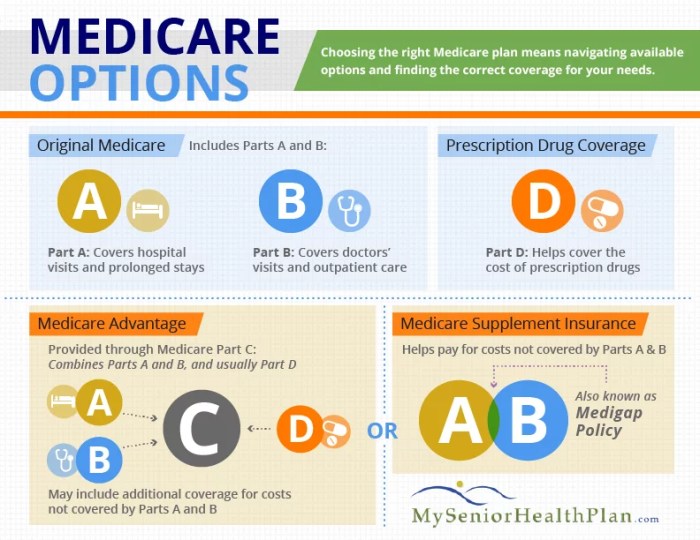
- Medicare Part A covers hospital stays, skilled nursing facility care, hospice care, and some home health care services.
- Medicare Part B covers outpatient services, preventive care, doctor visits, and durable medical equipment.
- Medicare Part C, also known as Medicare Advantage, offers additional benefits beyond Original Medicare, often including prescription drug coverage and vision or dental care.
- Medicare Part D provides prescription drug coverage to help seniors afford necessary medications.
Role of Home Healthcare Services
Home healthcare services play a crucial role in aiding seniors on Medicare by providing medical care in the comfort of their own homes. These services can include skilled nursing care, physical therapy, and assistance with daily activities. Home healthcare allows seniors to receive necessary medical attention without the need for extended hospital stays or frequent doctor visits, promoting independence and improving quality of life.
Medical Care Options for Seniors
As seniors on Medicare navigate their healthcare needs, it’s essential to explore the various medical care options available to them to ensure they receive the best possible care.
Specialized Medical Care Facilities
Specialized medical care facilities cater specifically to the unique needs of senior citizens, offering tailored services and expertise in geriatric care. These facilities often provide comprehensive care that focuses on the specific health concerns of older adults, ensuring they receive the specialized attention and treatment they require.
Benefits of Specialized Care
- Access to healthcare professionals with expertise in geriatric medicine.
- Customized treatment plans that address the complex health issues of seniors.
- Coordination of care between different specialists to ensure holistic treatment.
- Emphasis on preventive care to maintain overall health and well-being.
Importance of Preventive Care
Regular check-ups and preventive care play a crucial role in maintaining the health and quality of life for seniors on Medicare. By staying proactive and addressing potential health issues early on, seniors can prevent more serious health conditions and complications down the line.
Preventive care measures, such as screenings, vaccinations, and lifestyle interventions, can help seniors stay healthy and active as they age.
Health Insurance Plans for Seniors
When it comes to health insurance plans for seniors on Medicare, there are several options available to help cover medical costs and services that Medicare alone may not fully cover. Two common types of plans that seniors can consider are Medigap plans and Medicare Advantage plans.
Each plan has its own features and benefits that cater to the specific needs of senior citizens.
Medigap Plans
Medigap plans, also known as Medicare Supplement plans, are designed to fill the gaps in coverage left by Original Medicare (Part A and Part B). These plans are offered by private insurance companies and can help cover out-of-pocket costs such as copayments, coinsurance, and deductibles.
It’s important to note that Medigap plans cannot be used in conjunction with Medicare Advantage plans.
- Medigap plans are standardized and labeled with letters (e.g., Plan F, Plan G) to indicate the level of coverage they provide.
- These plans offer flexibility in choosing healthcare providers as they are not limited to a network.
- Medigap plans typically have higher monthly premiums but can help seniors save money in the long run by reducing out-of-pocket expenses.
Medicare Advantage Plans vs. Original Medicare
Medicare Advantage plans, also known as Medicare Part C, are comprehensive plans offered by private insurance companies approved by Medicare. These plans combine the benefits of Medicare Part A (hospital insurance) and Part B (medical insurance) and often include additional benefits such as prescription drug coverage.
- Medicare Advantage plans may have lower monthly premiums than Original Medicare but may require copayments or coinsurance for services.
- These plans often have networks of healthcare providers, meaning seniors may need to choose from a list of approved doctors and hospitals.
- Medicare Advantage plans may offer extra benefits like dental, vision, and hearing coverage that are not included in Original Medicare.
Medical Research and Innovations
Medical research plays a crucial role in advancing healthcare for seniors on Medicare by constantly seeking new knowledge and solutions to improve their quality of life. Through ongoing research efforts, new medical innovations have emerged, leading to better healthcare outcomes and the development of new treatment options specifically tailored for senior citizens.
Recent Medical Innovations for Senior Healthcare
- Telehealth services have become increasingly popular, allowing seniors to access medical care remotely and conveniently.
- Advancements in medical devices, such as wearable health monitors, have enabled seniors to monitor their health status in real-time.
- Personalized medicine approaches have emerged, providing targeted treatments based on individual genetic profiles to optimize efficacy and minimize side effects.
Contribution of Medical Research to New Treatment Options
- Research studies have led to the discovery of new medications and therapies specifically designed to address age-related health conditions common in seniors.
- Clinical trials play a vital role in testing the safety and efficacy of new treatments, ensuring that seniors receive evidence-based care.
- Genomic research has opened up possibilities for precision medicine, allowing healthcare providers to tailor treatment plans based on a senior’s unique genetic makeup.
Health Facilities and Clinics for Seniors
Accessible health facilities and clinics play a crucial role in ensuring the well-being of seniors on Medicare. These facilities provide essential medical services and support to address the unique healthcare needs of elderly individuals.
Specialized Healthcare Facilities for Seniors
Specialized healthcare facilities specifically cater to the needs of senior citizens, offering comprehensive services such as geriatric care, rehabilitation, and chronic disease management. These facilities are equipped with specialized medical equipment and staff trained to provide tailored care for elderly patients.
Community Health Clinics for Affordable Healthcare
Community health clinics play a vital role in providing affordable healthcare services to seniors on Medicare. These clinics offer a range of primary care services, preventive screenings, and health education programs to promote wellness and disease prevention among the elderly population.
Additionally, community health clinics often collaborate with local organizations to ensure seniors have access to necessary medical resources and support.
Healthcare Tips for Seniors
Maintaining well-being is essential for seniors on Medicare to lead a healthy and active lifestyle. Here are some practical healthcare tips to help seniors stay healthy and navigate the healthcare system effectively.
Importance of Healthy Lifestyle and Regular Exercise
Staying active and adopting a healthy lifestyle are crucial for seniors on Medicare. Regular exercise can help improve mobility, reduce the risk of chronic diseases, and enhance overall well-being. It is recommended for seniors to engage in activities such as walking, swimming, or gentle yoga to stay fit and maintain muscle strength.
Navigating the Healthcare System Effectively
Understanding how the healthcare system works can be overwhelming for seniors, but it is important to navigate it effectively to receive the necessary care. Seniors should familiarize themselves with their Medicare coverage, keep track of medical appointments and medications, and communicate openly with healthcare providers to address any concerns or questions.
Health Systems and Policies
Health systems and policies play a crucial role in determining the quality and accessibility of healthcare services for seniors on Medicare. Understanding the current landscape and identifying areas for improvement is essential to ensure that senior citizens receive the care they need.
Current Health Systems and Policies for Seniors on Medicare
Seniors on Medicare navigate a complex healthcare system that includes a mix of public and private insurance options. Medicare is the primary health insurance program for individuals aged 65 and older, providing coverage for hospital stays, doctor visits, and prescription drugs.
However, gaps in coverage, such as dental, vision, and long-term care services, pose challenges for seniors seeking comprehensive care.
Challenges in Accessing Quality Healthcare
- Limited access to specialists: Seniors often face difficulties in accessing specialty care due to long wait times and limited provider networks.
- High out-of-pocket costs: Medicare beneficiaries may struggle to afford copayments, deductibles, and prescription drugs, leading to delayed or foregone care.
- Health disparities: Seniors from marginalized communities experience disparities in healthcare access and outcomes, exacerbating existing health inequalities.
Potential Improvements and Reforms
- Expand Medicare coverage: Addressing gaps in Medicare coverage, such as dental, vision, and hearing services, can enhance the overall health and well-being of seniors.
- Enhance care coordination: Implementing care coordination programs to streamline communication among healthcare providers can improve the quality and efficiency of care for seniors.
- Invest in preventive care: Prioritizing preventive services and wellness programs can help seniors maintain optimal health and reduce the need for costly medical interventions.
Outcome Summary
In conclusion, the landscape of health insurance for seniors on Medicare is vast and intricate, but armed with the knowledge and guidance provided here, you can confidently navigate this terrain and ensure a secure future for your health and well-being.
Frequently Asked Questions
What are the benefits of Medigap plans?
Medigap plans help cover costs that Original Medicare doesn’t, such as copayments, coinsurance, and deductibles, providing seniors with more comprehensive coverage.
Is prescription drug coverage included in all Medicare plans?
No, prescription drug coverage is not included in Original Medicare (Parts A and B). Seniors can opt for Medicare Part D to get prescription drug coverage.
Can seniors on Medicare choose any healthcare provider?
While Original Medicare allows seniors to see any provider that accepts Medicare, Medicare Advantage plans may have network restrictions. It’s important to check with the specific plan.
What is the difference between Medicare Advantage and Original Medicare?
Medicare Advantage (Part C) combines Parts A and B of Original Medicare and often includes additional benefits like prescription drug coverage. Original Medicare allows seniors to choose their providers and doesn’t usually include drug coverage.


